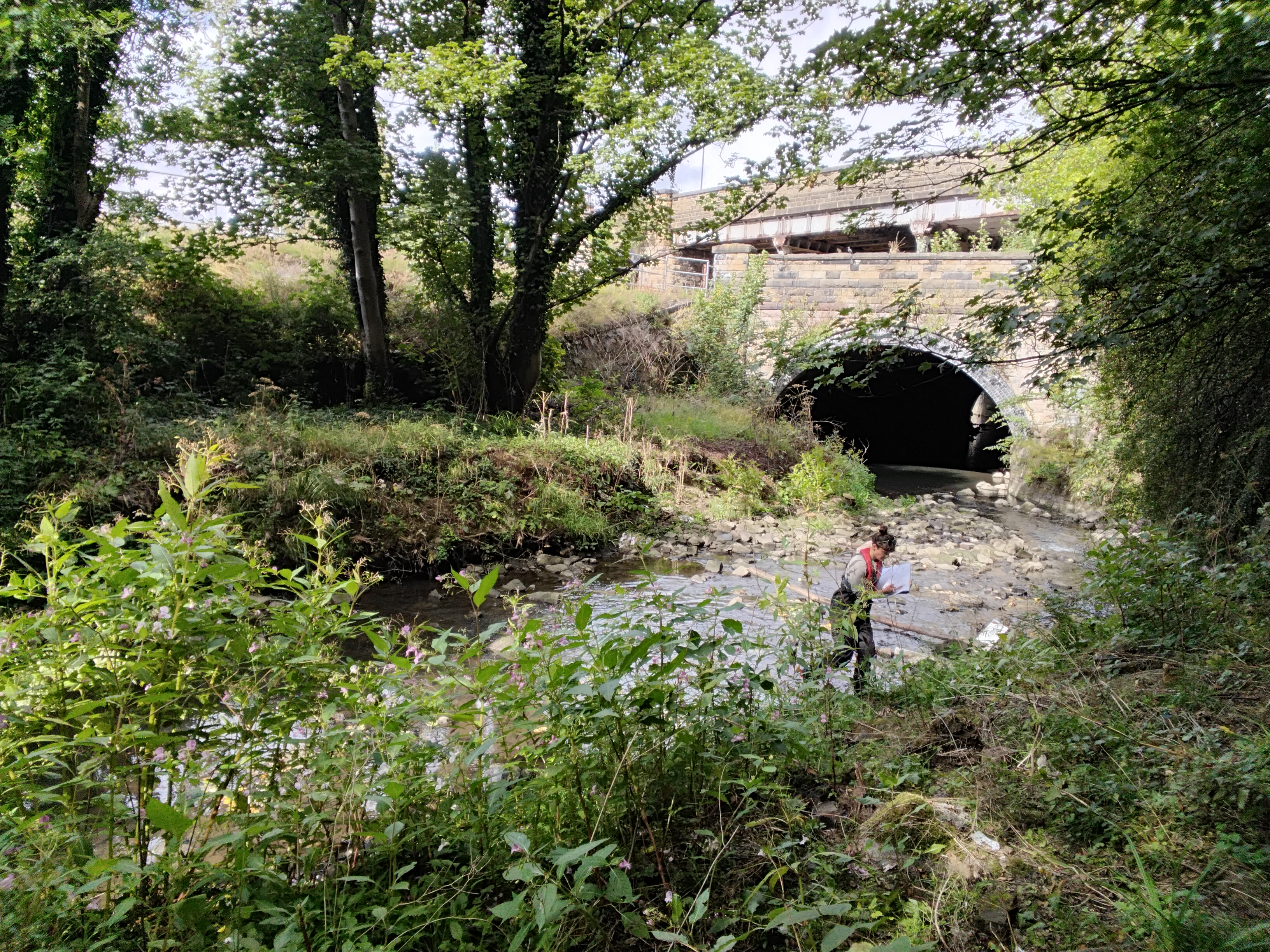
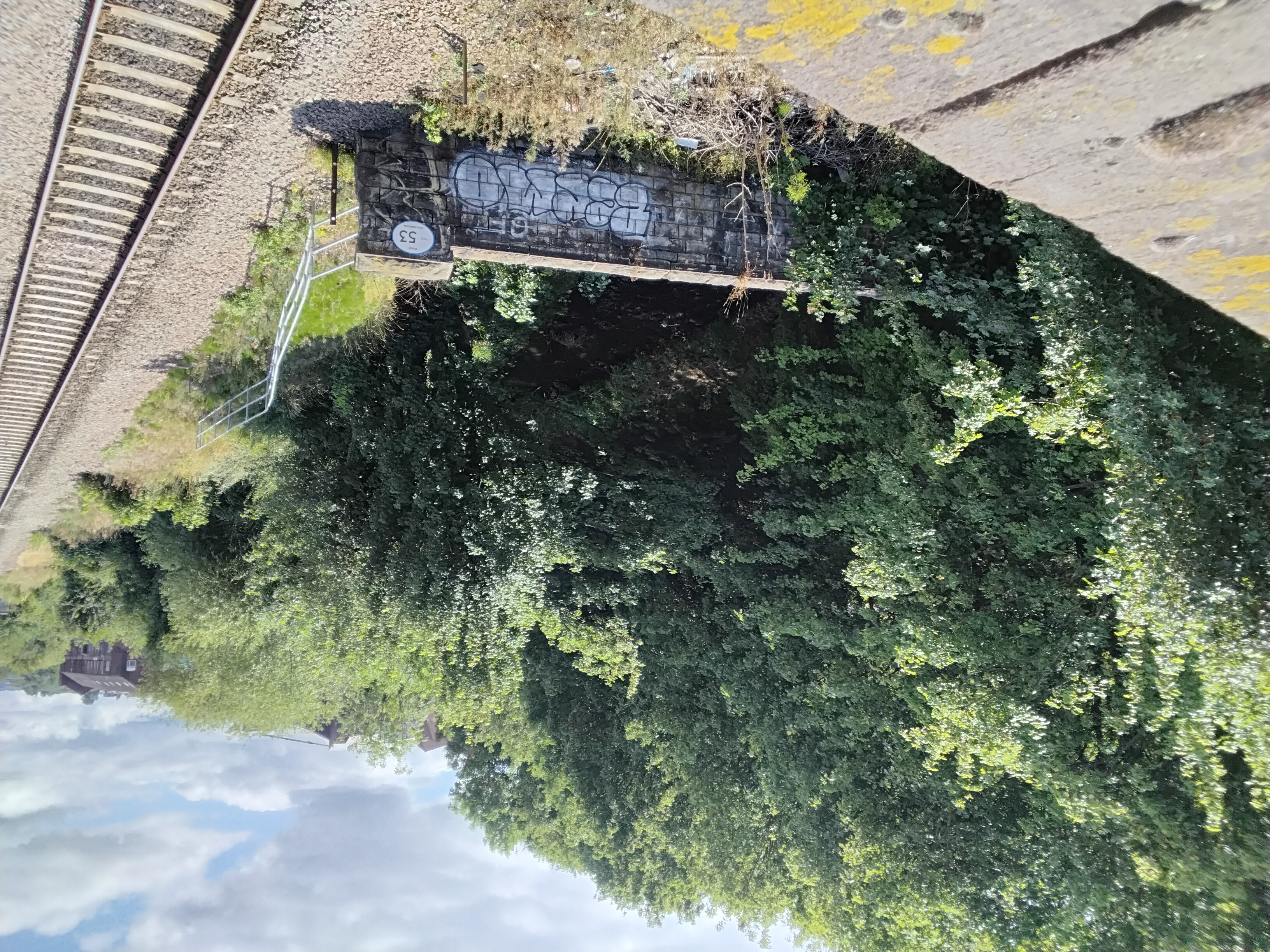
Peaking over the bridge or between broken fence panels and railings, you can catch a glimpse of the river next to the railway line. This in-accessible bit of the River Sheaf has more naturalistic features and greenery, offering potential shelter and areas for wildlife to enjoy, without too much disturbance.
To find out more and take action, visit https://actionnetwork.org/forms/sign-up-to-receive-the-river-walk-pack
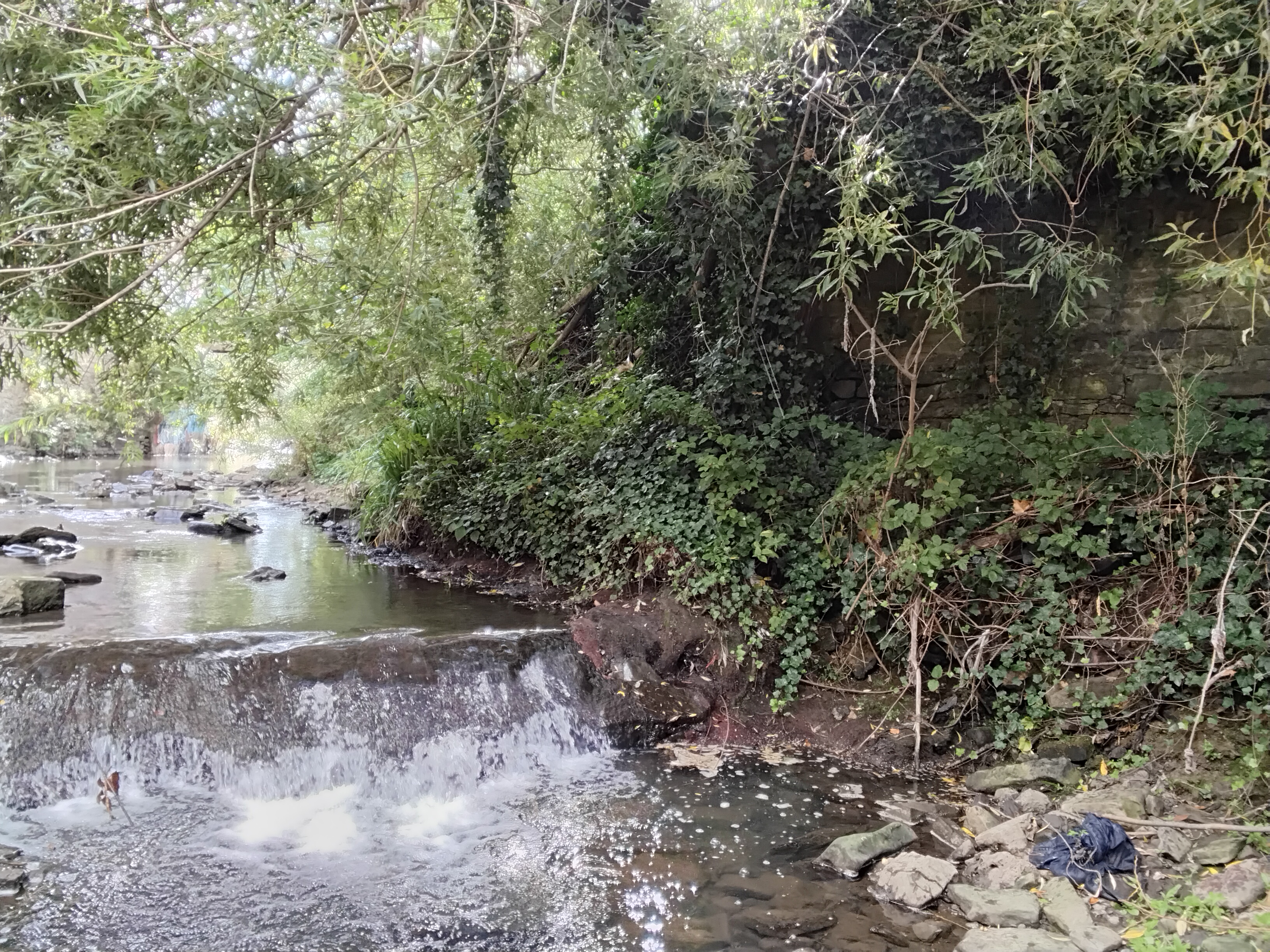
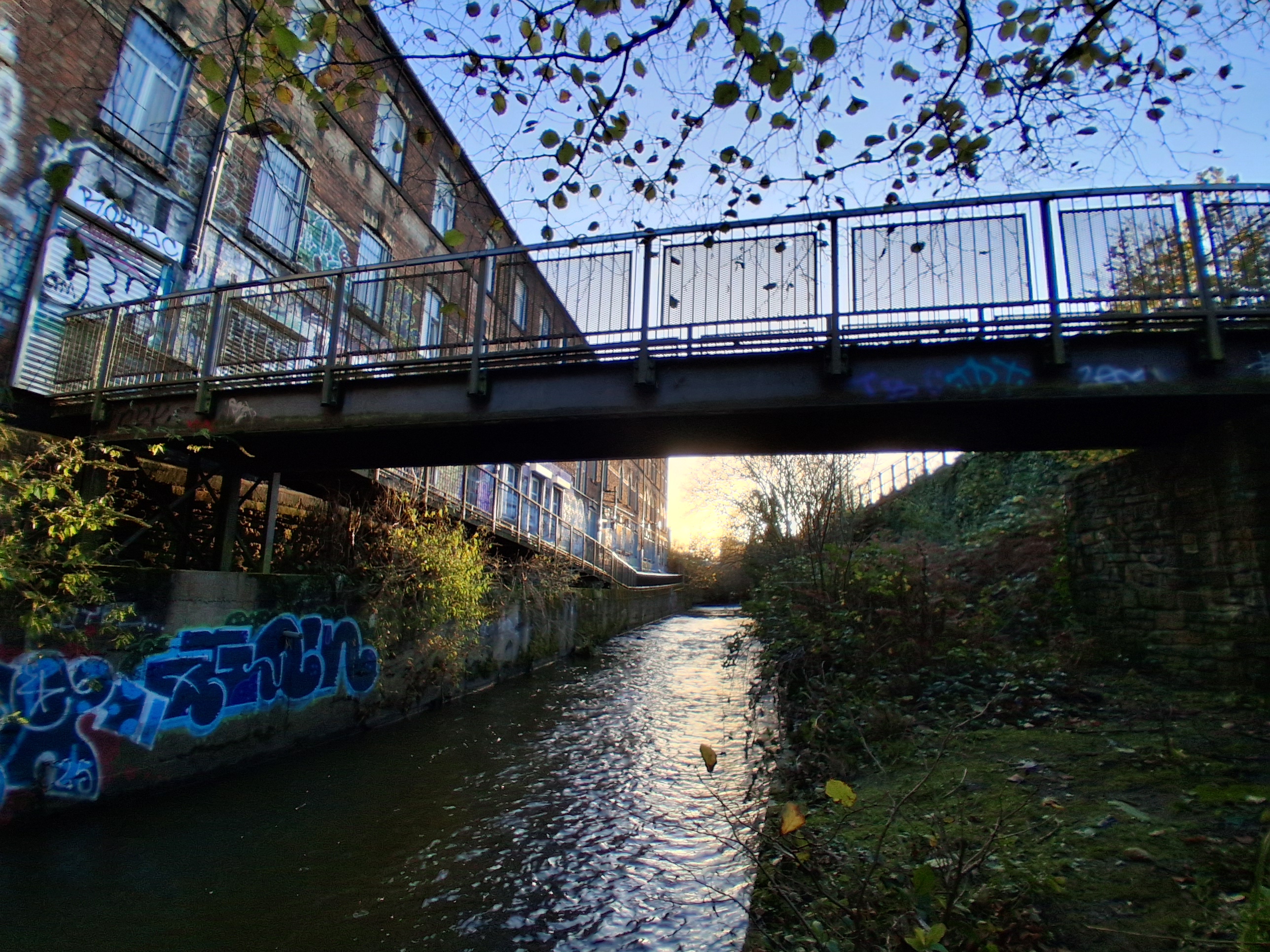
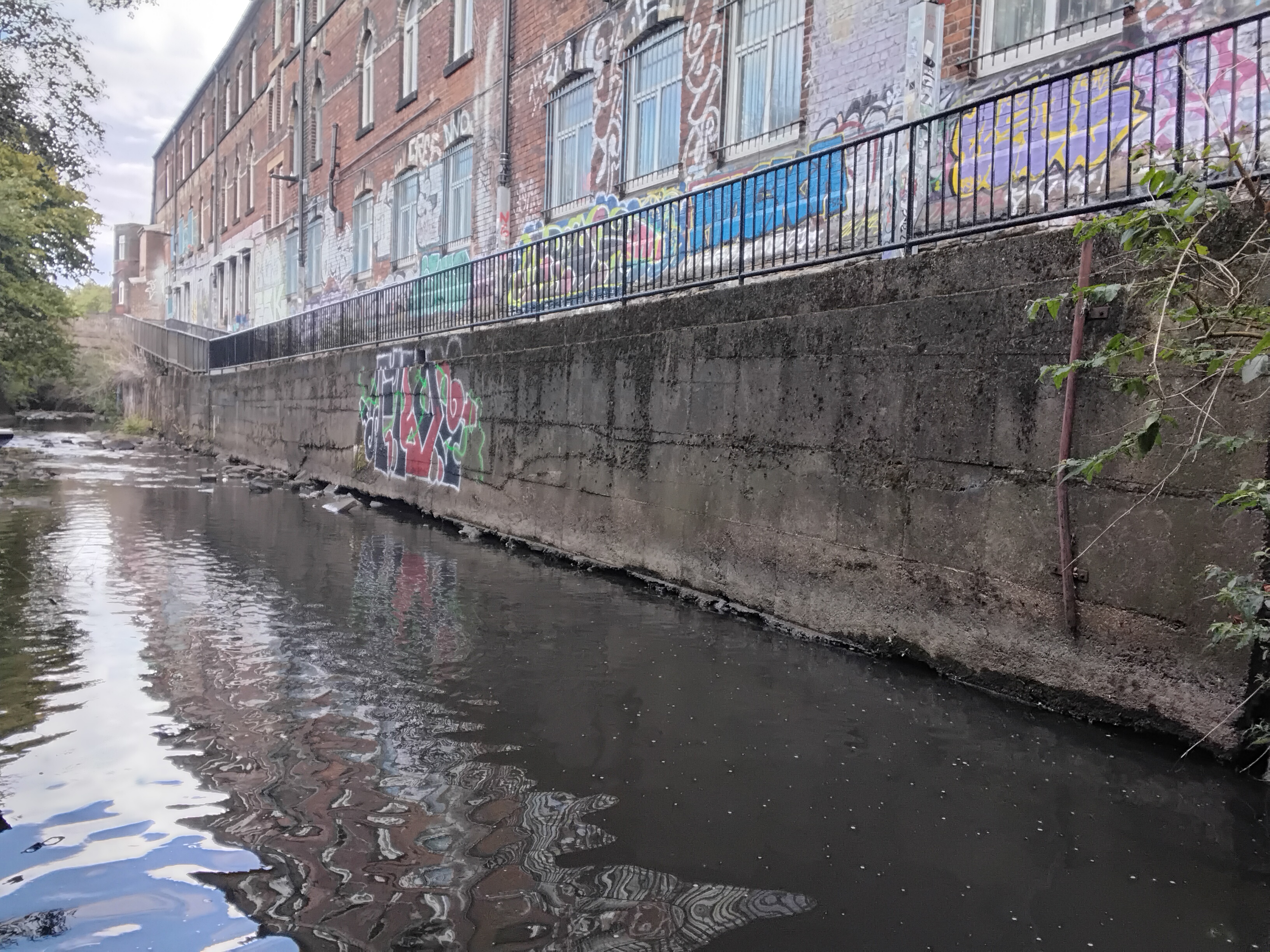
As you enter Cutler’s Walk here, you can really feel the industrialisation and containment of the river between the railway and the industrial unit, and see the uniform, often grey-looking (and foul-smelling) river running perfectly straight below. As you exit under the railway bridge, stop and listen to the sound of water
tumbling over a small partially collapsing weir, not visible from the footbridge.
To find out more and take action, visit https://actionnetwork.org/forms/sign-up-to-receive-the-river-walk-pack
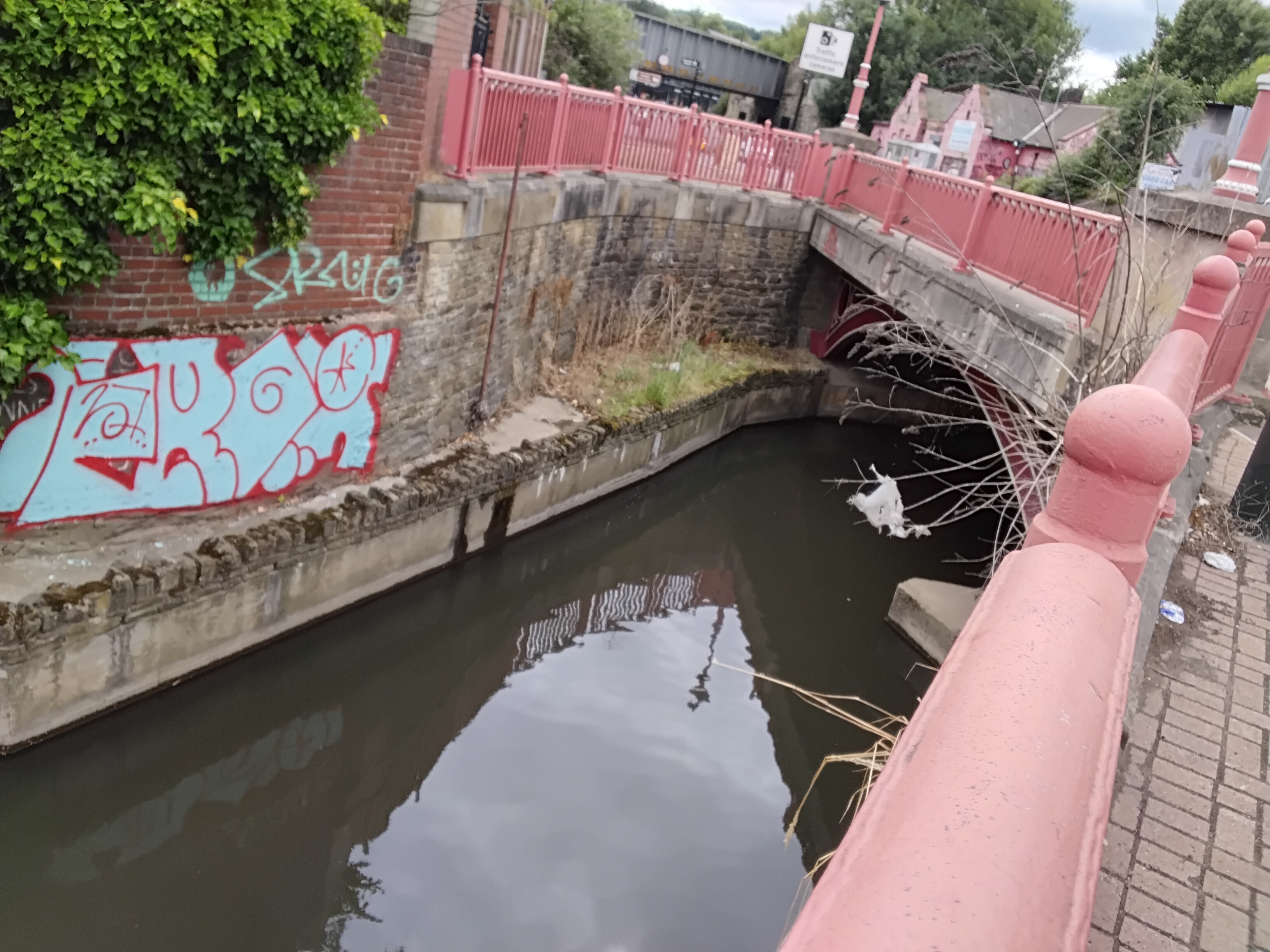
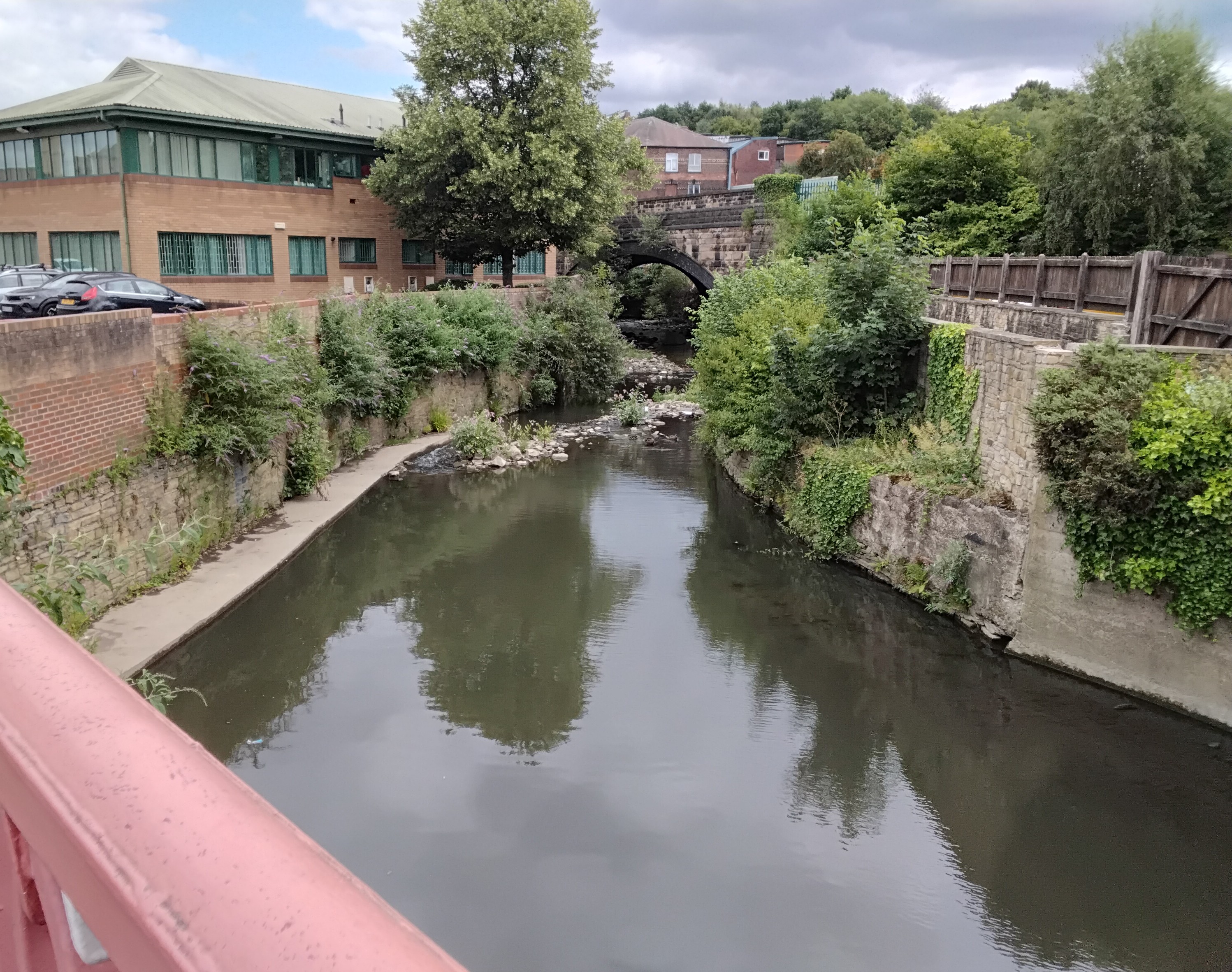
The boxed-shaped channel geometry and reinforced bed and banks offer little ecological value. However,
crumbling river walls and trailing, dense bankside scrub in isolation offer nesting potential.
To find out more and take action, visit https://actionnetwork.org/forms/sign-up-to-receive-the-river-walk-pack
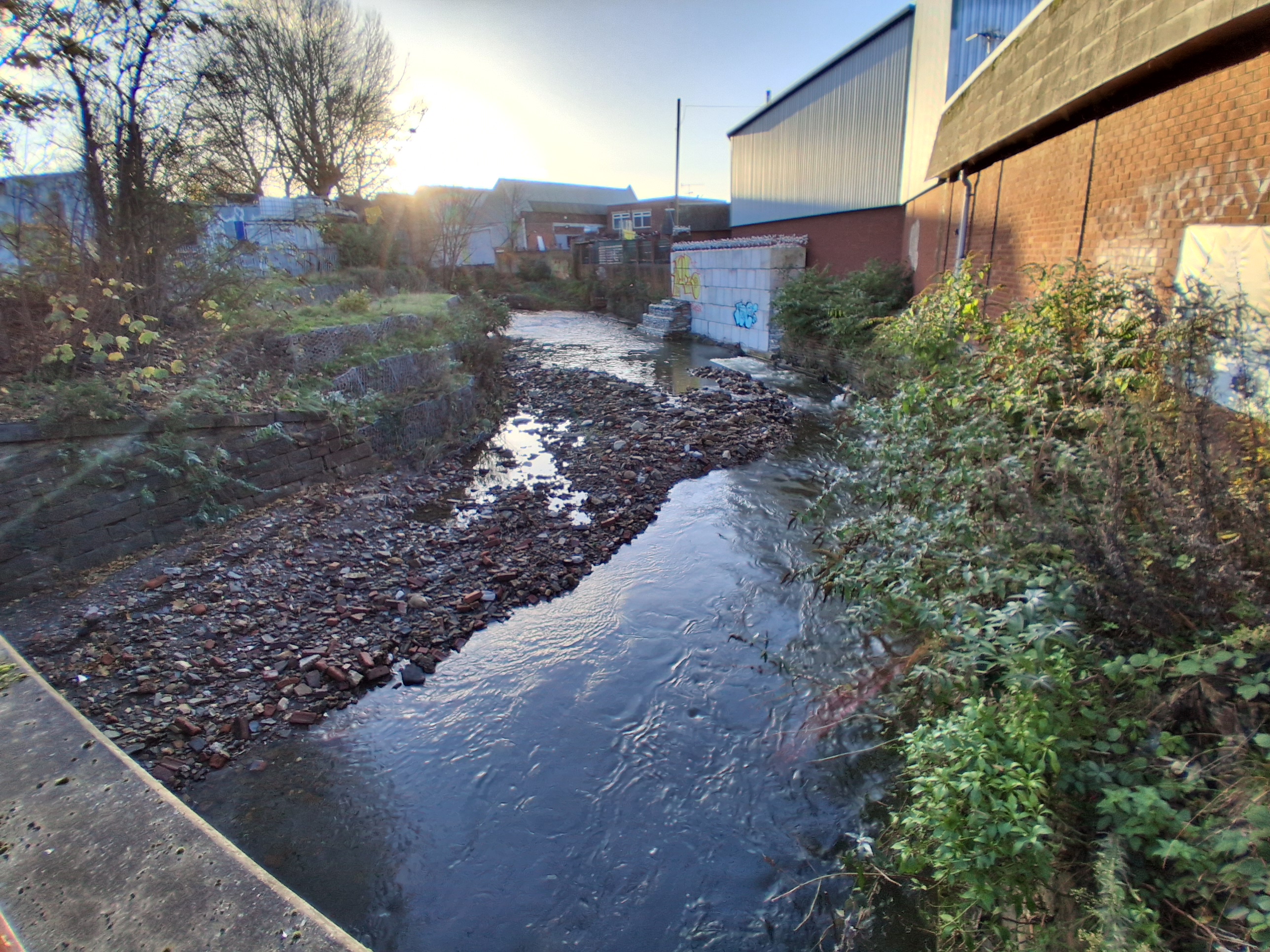
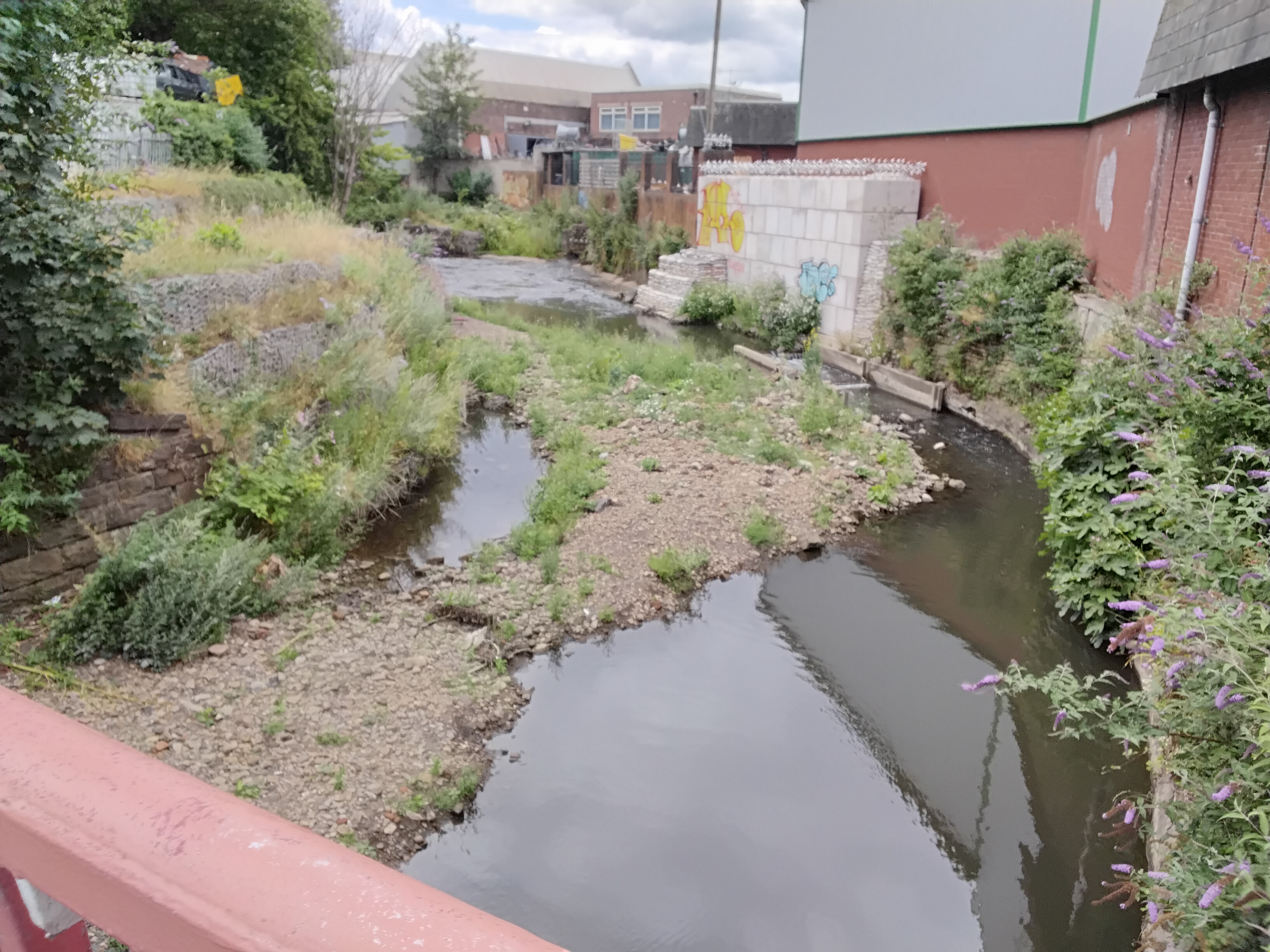
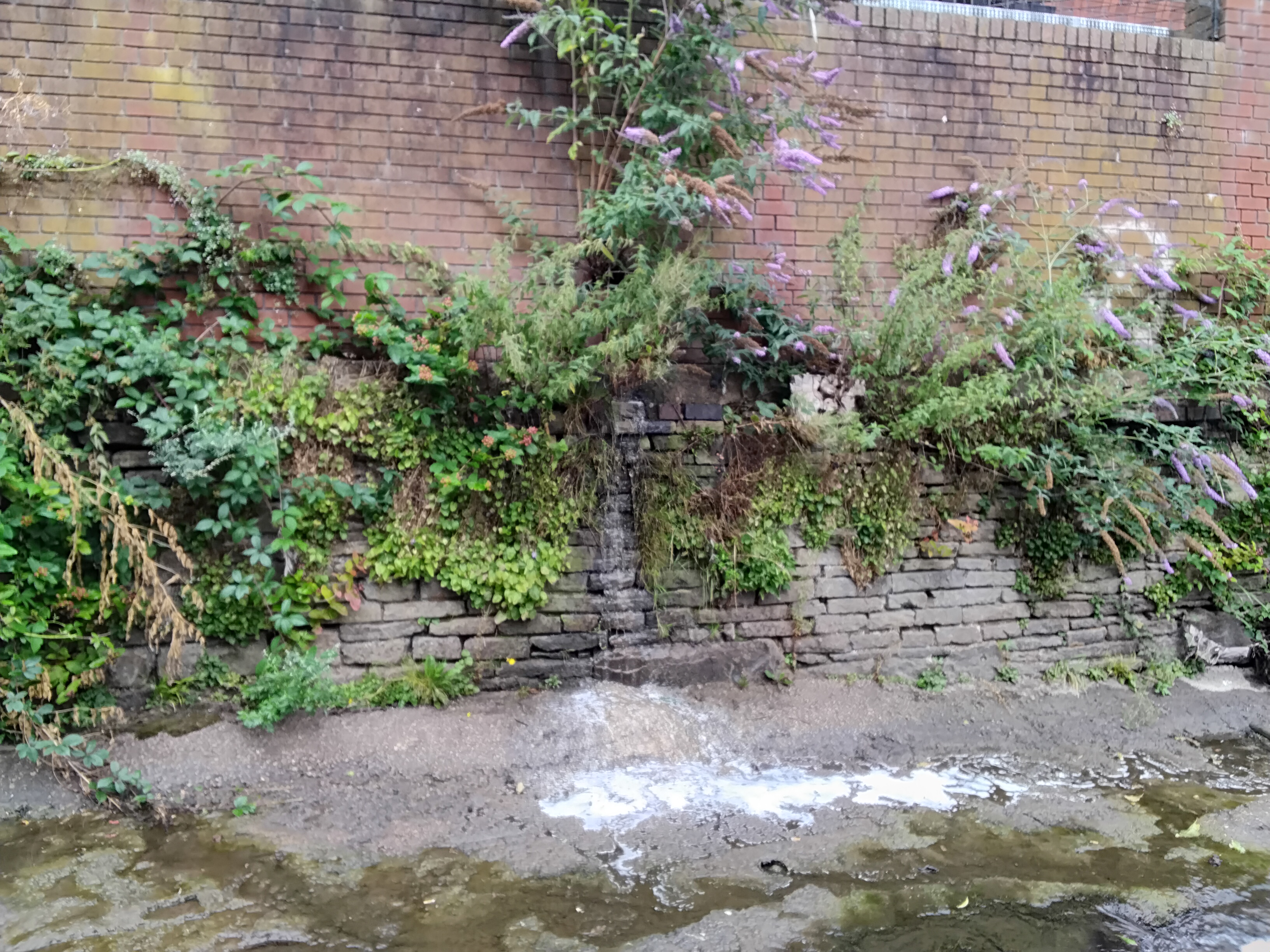
Standing on the bridge, with the scrap yard to your left, you can see a patchwork of bank stabilisation measures which have been added to over the years, a historic weir (now buried by a mixture of coarse sediment and rubble) with a fish passage and a ‘gravel trap’, all acting to control river processes and interrupt natural functioning. The fig trees and tomato plants you will see along here are evidence of historic and recent sewage entering the river. Think about where the seeds come from!
To find out more and take action, visit https://actionnetwork.org/forms/sign-up-to-receive-the-river-walk-pack
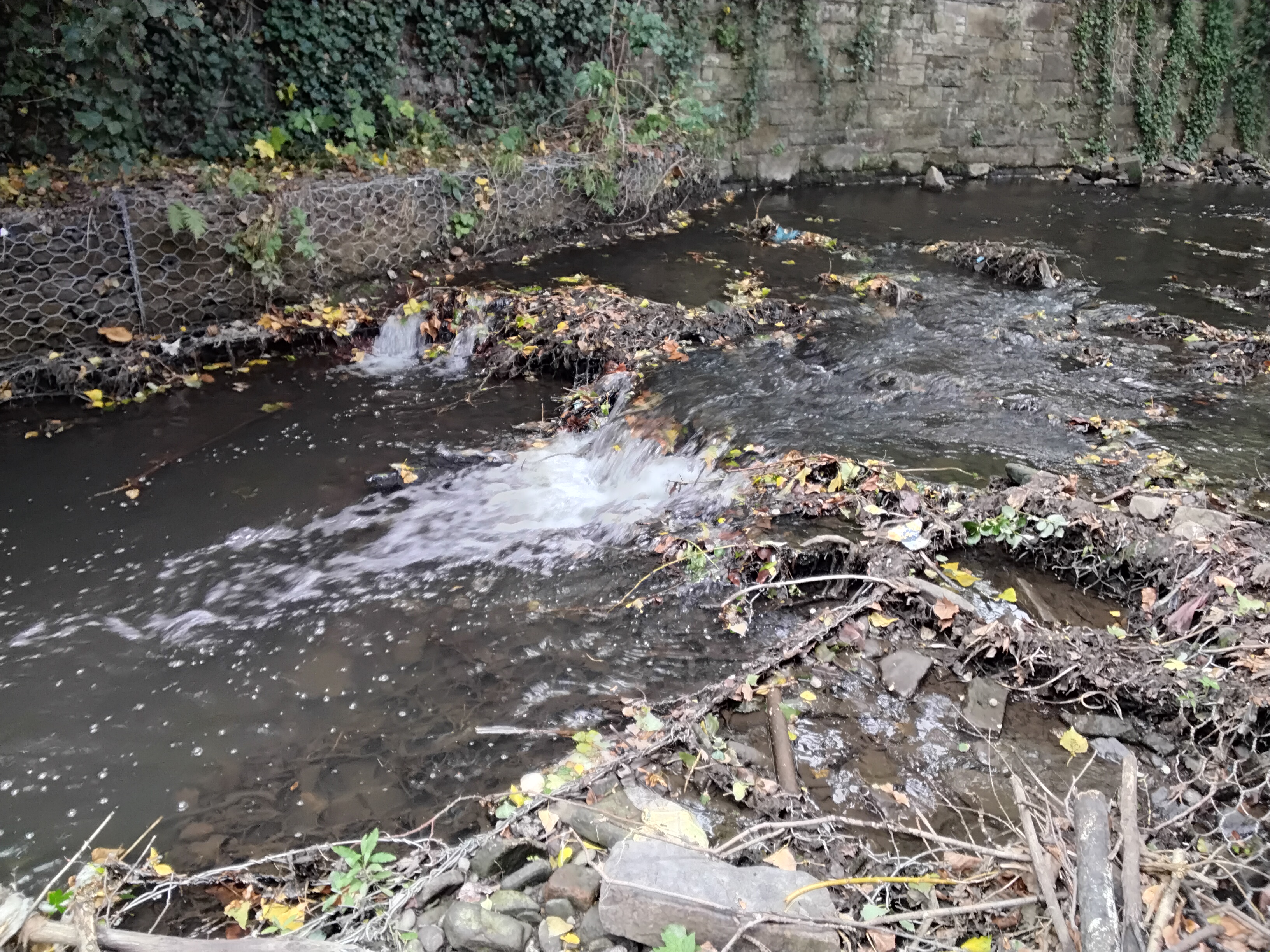
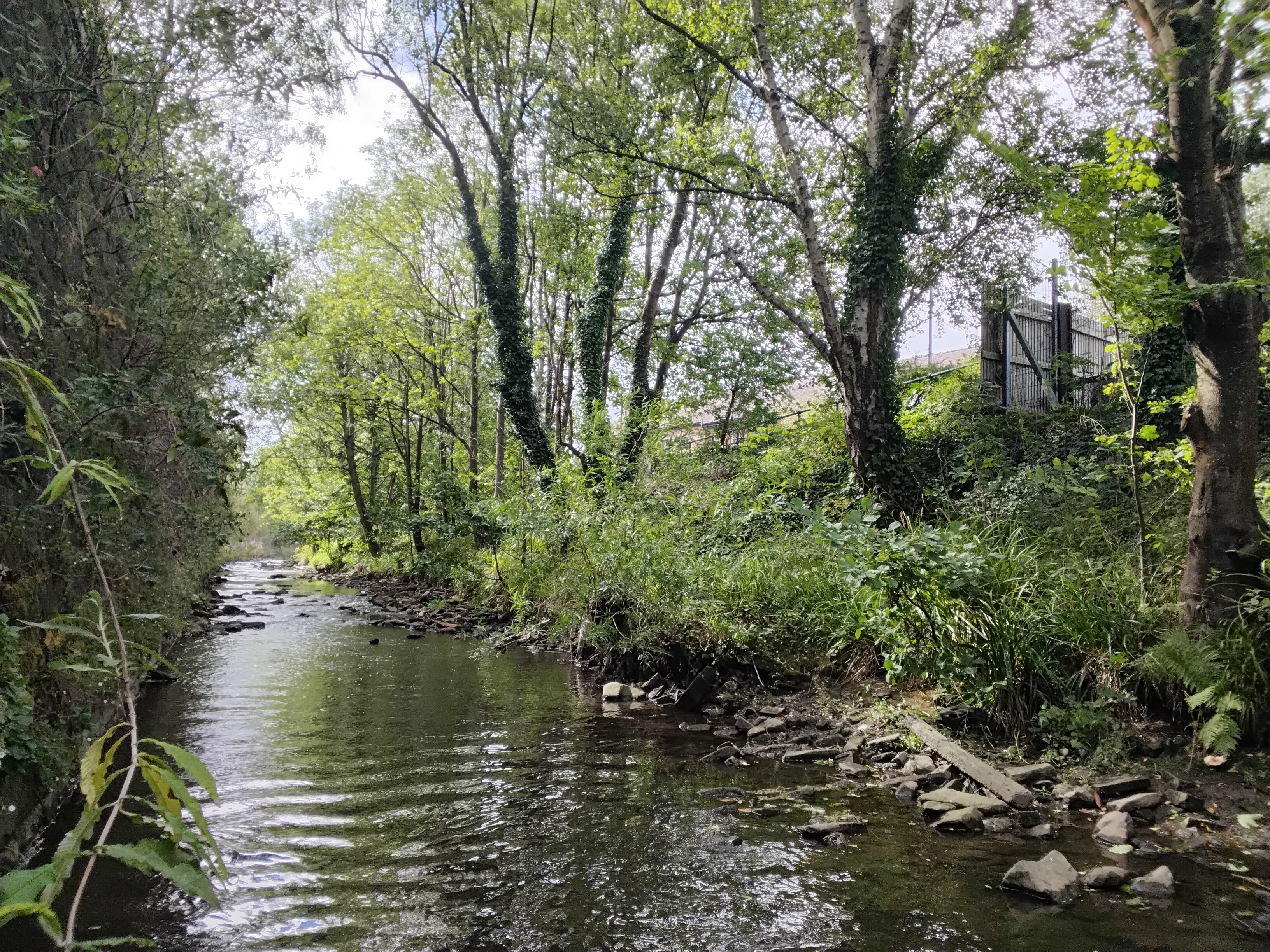
Here, a footpath provides a riverside view and a riverside park (opened by the Sheaf & Porter Rivers Trust), provides a glimpse of nature inviting you in to enjoy a locally rare pocket of mature native tree canopy over the channel, a good mix of native under story and some ancient woodland indicator species (dog’s mercury and wood melick).
Then, out of site from the general public, channel modifications are again present, in this case, in the form of gabions (cages filled with stone) which are failing and scour holes are forming.
To find out more and take action, visit https://actionnetwork.org/forms/sign-up-to-receive-the-river-walk-pack
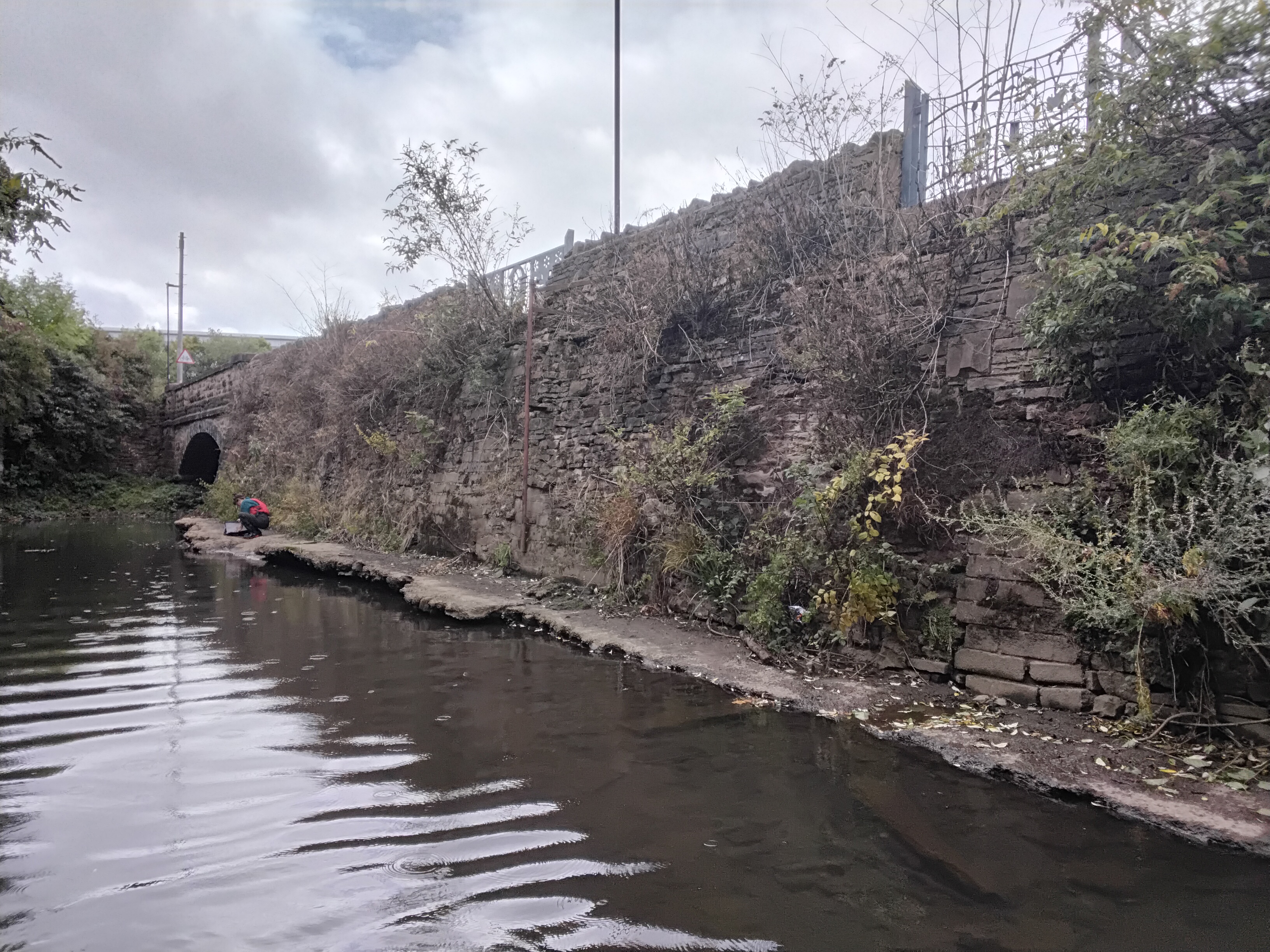
Here, the river is uniform, straight and confined by high walls between the railway and industrial zone. The walls are in varying degrees of condition and waste has been known to be fly tipped into the river.
To find out more and take action, visit https://actionnetwork.org/forms/sign-up-to-receive-the-river-walk-pack
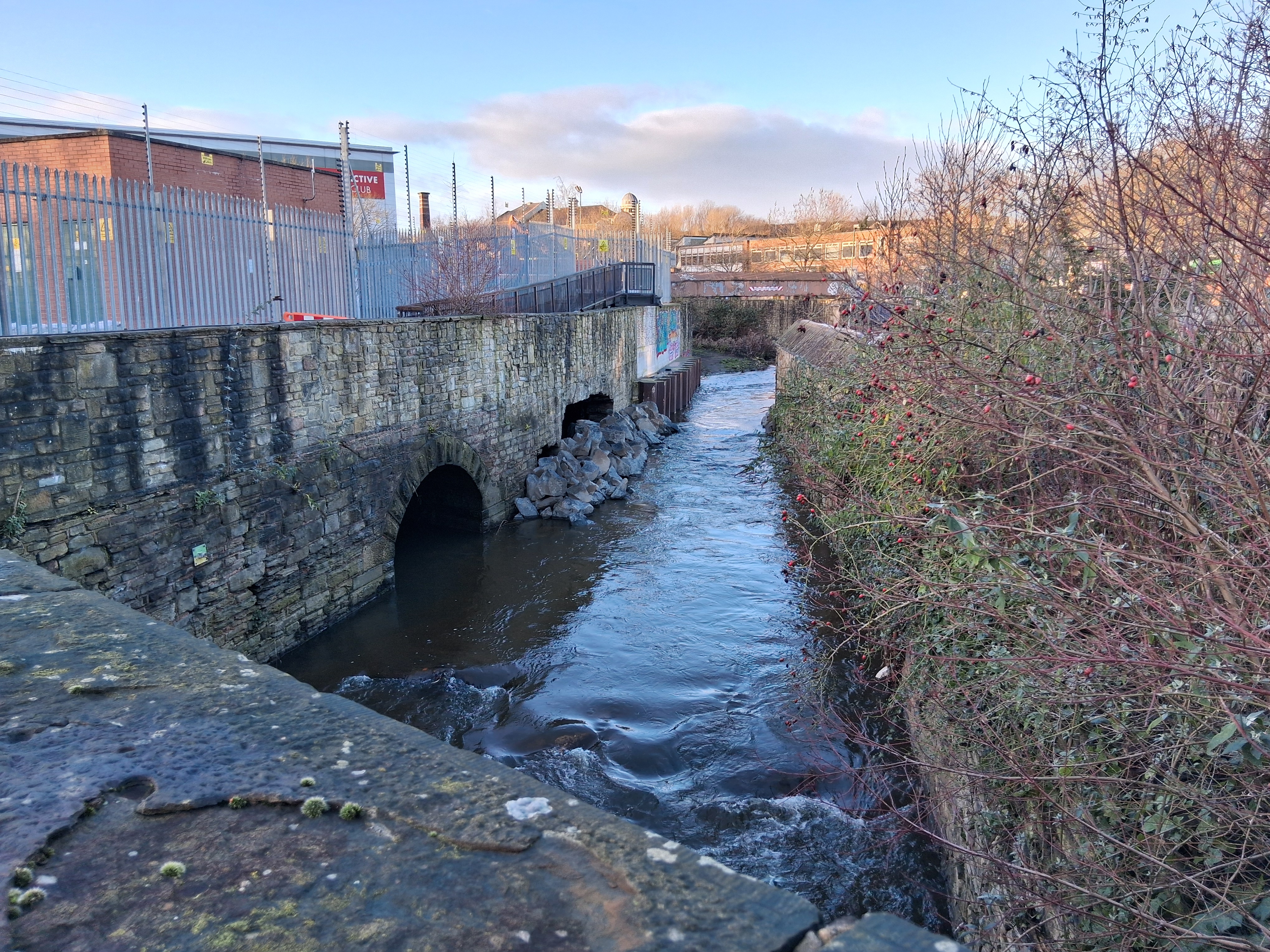
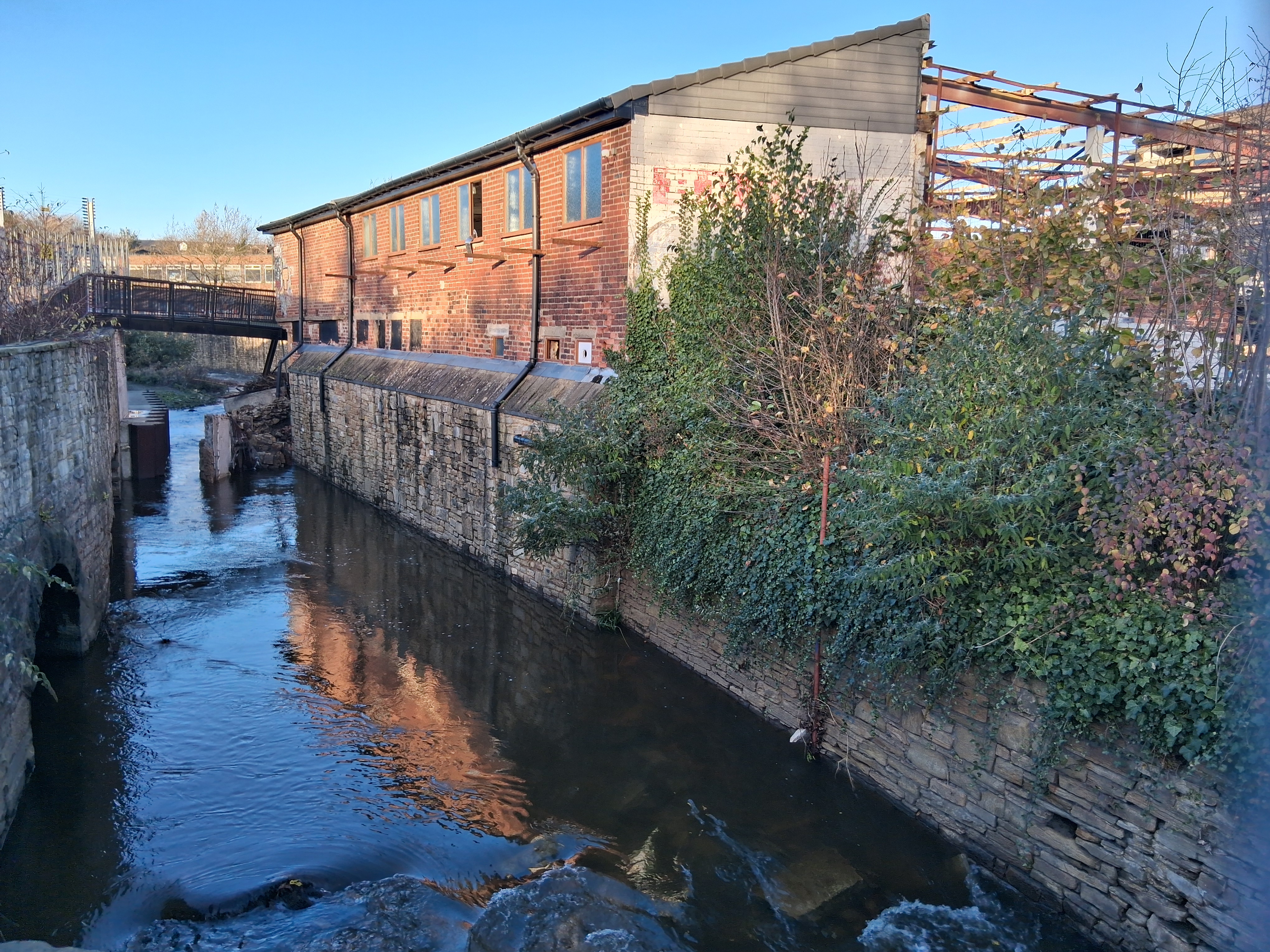
The river exits a brick-lined ‘flume’ running parallel to Broadfield Road, takes a right-
angled turn onto Clyde Road, and here the Meers Brook enters, after flowing 1km
underground. This section of river has been subjected to several iterations of
temporary and permanent engineered solutions to ‘hold the current line’ of flood
defences, which are collapsing into the river, leaving close to 300 businesses and residential properties at increased risk.
To find out more and take action, visit https://actionnetwork.org/forms/sign-up-to-receive-the-river-walk-pack